
A Peek Behind the Curtain: What’s Happening with Community Schools in the Sandhills
February 11, 2026
by Brittany Gregory, ncforum.org
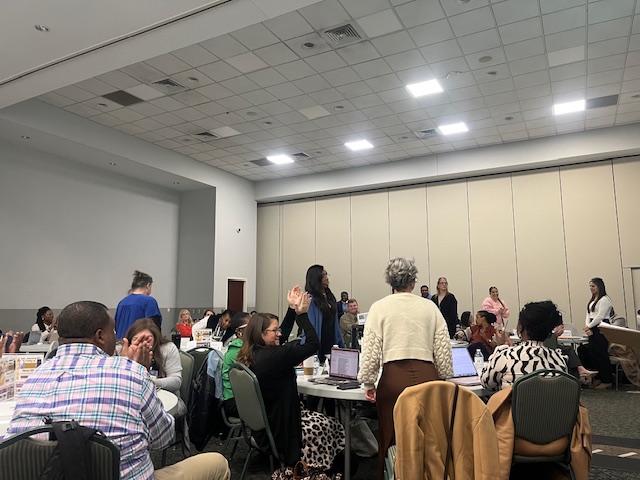
In January, educators and community leaders from across the Sandhills region gathered in Hamlet for a regional Community Schools convening hosted by the Sandhills Regional Education Consortium. It followed the official launch of Community Schools across the region earlier this month and offered a rare look behind the curtain at how public schools are working together to better serve students, families, and communities.
What stood out wasn’t a flashy announcement or a new program. It was the way people were in conversation.
Community School Coordinators, principals, district leaders, and representatives from the North Carolina Department of Public Instruction sat at the same tables, learning together. They met both horizontally with peers in similar roles and vertically across schools, districts, and the state. That structure mattered. It made something visible that often feels hidden, how information actually moves in a public school system.
At its core, the conversation kept coming back to alignment. Not alignment for its own sake, but alignment around shared goals, clear communication, and trust. Participants talked openly about what’s working, what’s hard, and what it takes to make schools feel connected rather than isolated. They named the importance of ensuring voices from schools reach decision-makers, and building communication loops that go both ways.
There was also an intentional choice behind the timing. Launching Community Schools midyear wasn’t about rushing change. It was about slowing down enough to build relationships first. This phase is focused on listening, mapping existing strengths, understanding community needs, and laying a foundation before the next school year begins. In other words, doing the work that lasts.
Throughout the day, one idea surfaced again and again. Community Schools are not new work. They are the container for the work. The framework brings structure and clarity to what Sandhills communities have long done, supporting children through relationships, local partnerships, and shared responsibility. It offers a clear vision while honoring local history, culture, and pride.
Participants were also honest about the uphill battle public schools face, especially when it comes to public perception. There was no sugarcoating the challenges. But there was a steady commitment to protecting schools from scarcity narratives and reminding one another that abundance of care, talent, and possibility does exist.
Perhaps most powerful was the acknowledgment that voice has weight. When people know where their input goes and that it matters, they show up differently. That matters for educators. It matters for families. And it matters for communities that want to believe in their public schools again.
What happened in Hamlet wasn’t just a meeting. It was a snapshot of what’s possible when public schools are treated as community anchors, places where coordination, communication, and care come together in service of children and the places they call home.