A Shared Ecosystem: How NC Community Schools and Higher Education Are Working Together
April 14, 2026
by Alec Greenwald and Brittany Gregory
The 2nd Annual Southeast Regional Coalition for University-Assisted Community Schools (SRCUACS) Symposium, held April 7–8 at NC State University and North Carolina Central University, brought together more than 130 practitioners from across North Carolina and beyond. The goal was clear: to strengthen how colleges and universities engage with the growing number of NC Community Schools across the state.
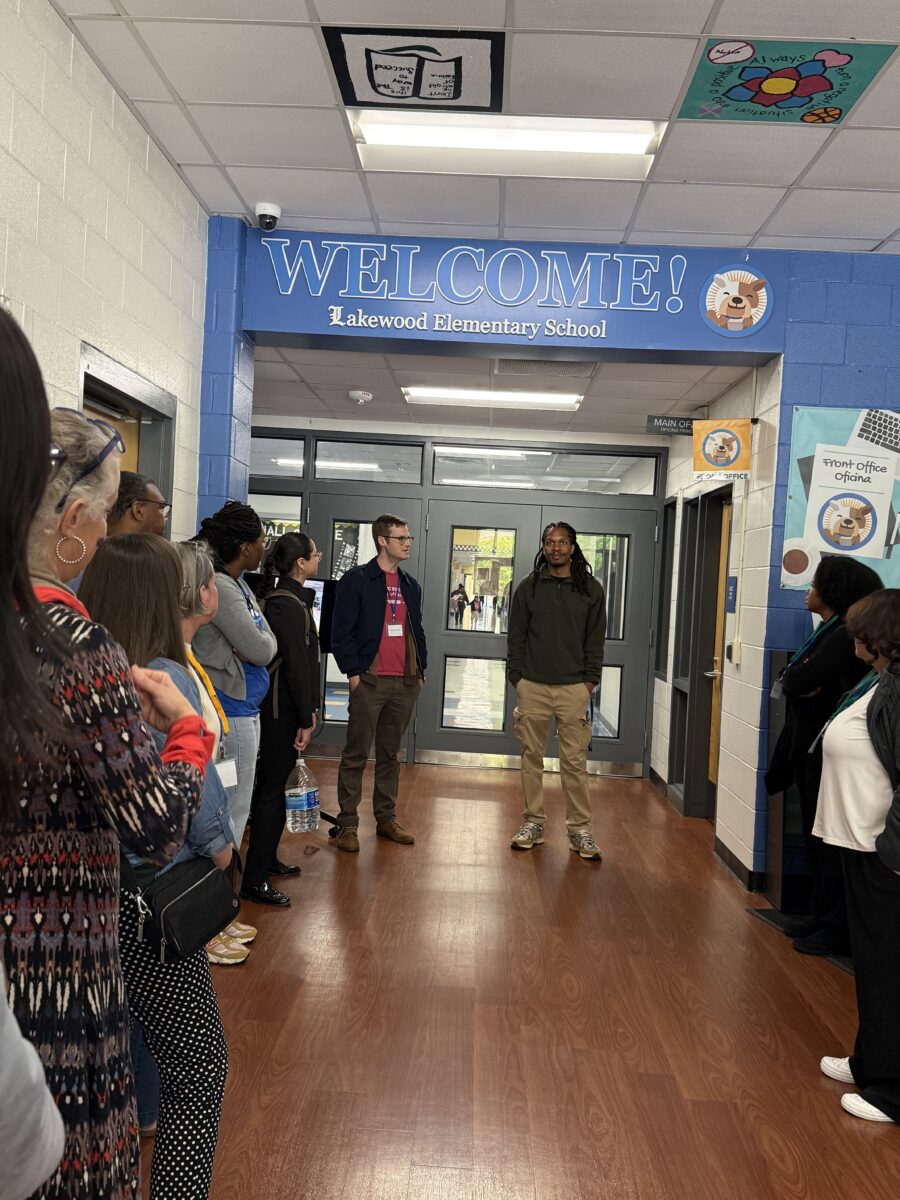
It looked like a bus full of leaders — K-12 educators, community college partners, university faculty, and students — pulling up to an elementary school in the middle of the school day. They stepped off not as visitors, but as part of the work. In that moment, what can often feel like separate systems — public schools, higher education, workforce development — was operating as one.
SRCUACS, a statewide partner of the North Carolina Community Schools Coalition (NCCSC), serves as a regional training center for university-assisted community schools. Its focus is simple but significant: align higher education with K-12 public schools in ways that are responsive to community-defined needs.
That alignment starts with a shift in approach. Community schools lead by identifying their own strengths and priorities through comprehensive asset and needs assessments. Colleges and universities are not driving the work — they are responding to it. Partnerships are interdisciplinary, drawing from across campuses, and are grounded by Community School Coordinators who ensure the work stays aligned with school and community goals.
During the opening session, Jerry Johnson, director of the Rural Education Institute at East Carolina University, described the role of higher education as one of connection. “We don’t build relationships by building relationships,” he said. “We build relationships by engaging in meaningful activity together.” His words captured what participants experienced throughout the symposium: partnership not as a concept, but as shared work.
At its core, this approach reflects a broader shift. K-12 schools, community colleges, and universities are beginning to operate as part of a shared ecosystem, organizing their resources around students, families, and place. Instead of working in parallel, these systems are moving in coordination, strengthening the NC Community Schools framework in real time.
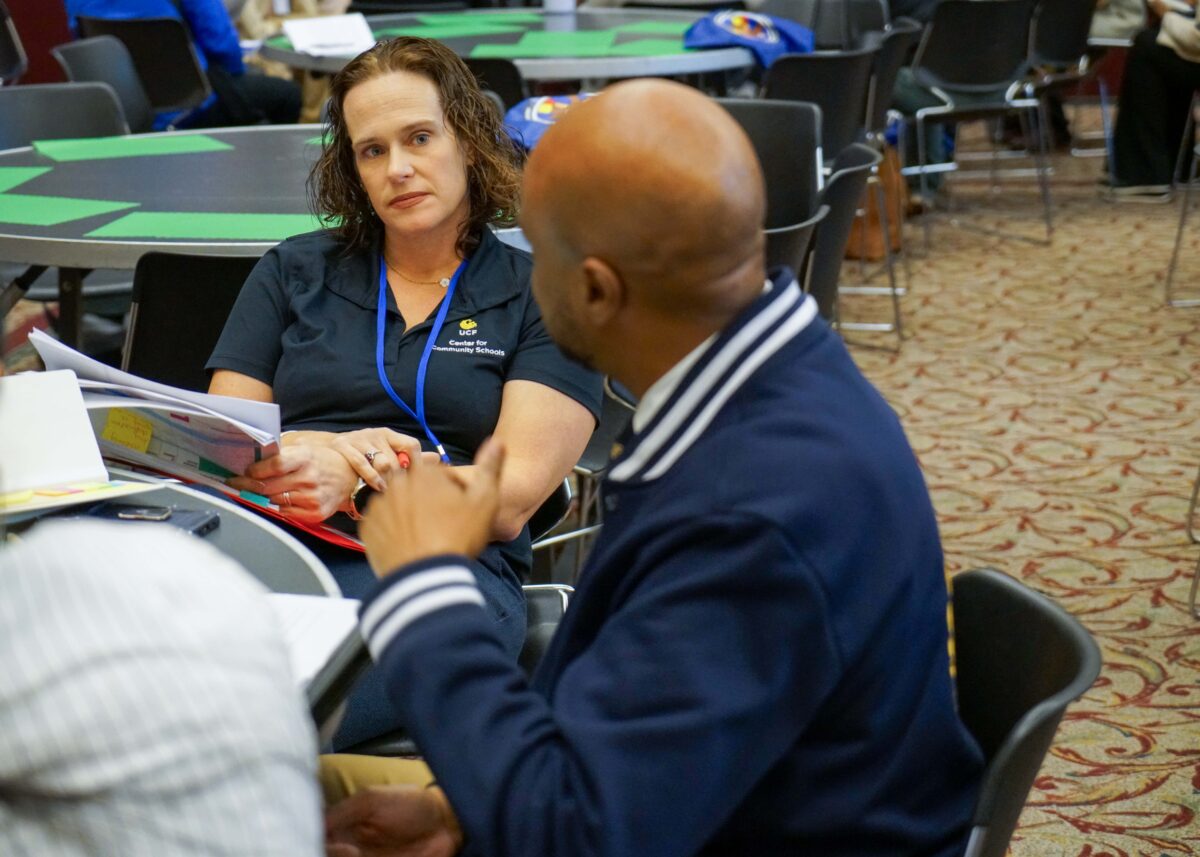
Dan Kimberg, director of NCCSC, grounded this work in both history and values. He traced North Carolina’s long tradition of community schooling while emphasizing a guiding principle: “Nobody owes us entry.” The reminder was clear — meaningful partnerships begin with humility, listening, and respect for the communities schools already serve.
Across sessions, that alignment came into focus through examples from across the state. Districts like Orange County Schools and Elizabeth City-Pasquotank Public Schools are building multi-layered partnerships with Duke University and Elizabeth City State University. Teacher pipeline efforts are emerging through collaborations with Elon University, Duke University, and NC State. Community colleges, including Sampson Community College, are helping formalize and sustain the role of Community School Coordinators. Social work interns from UNC Chapel Hill, NCCU, UNC Pembroke, and Fayetteville State University are expanding support inside schools.
Taken together, these efforts point to a more coordinated approach to workforce development in North Carolina. Students are gaining early exposure to careers in education, health, and public service, while schools benefit from additional capacity and expertise. In the short term, that means more support inside schools — more adults, more connection, more coordination. Over time, it builds a stronger, locally rooted workforce prepared to serve the communities they come from.
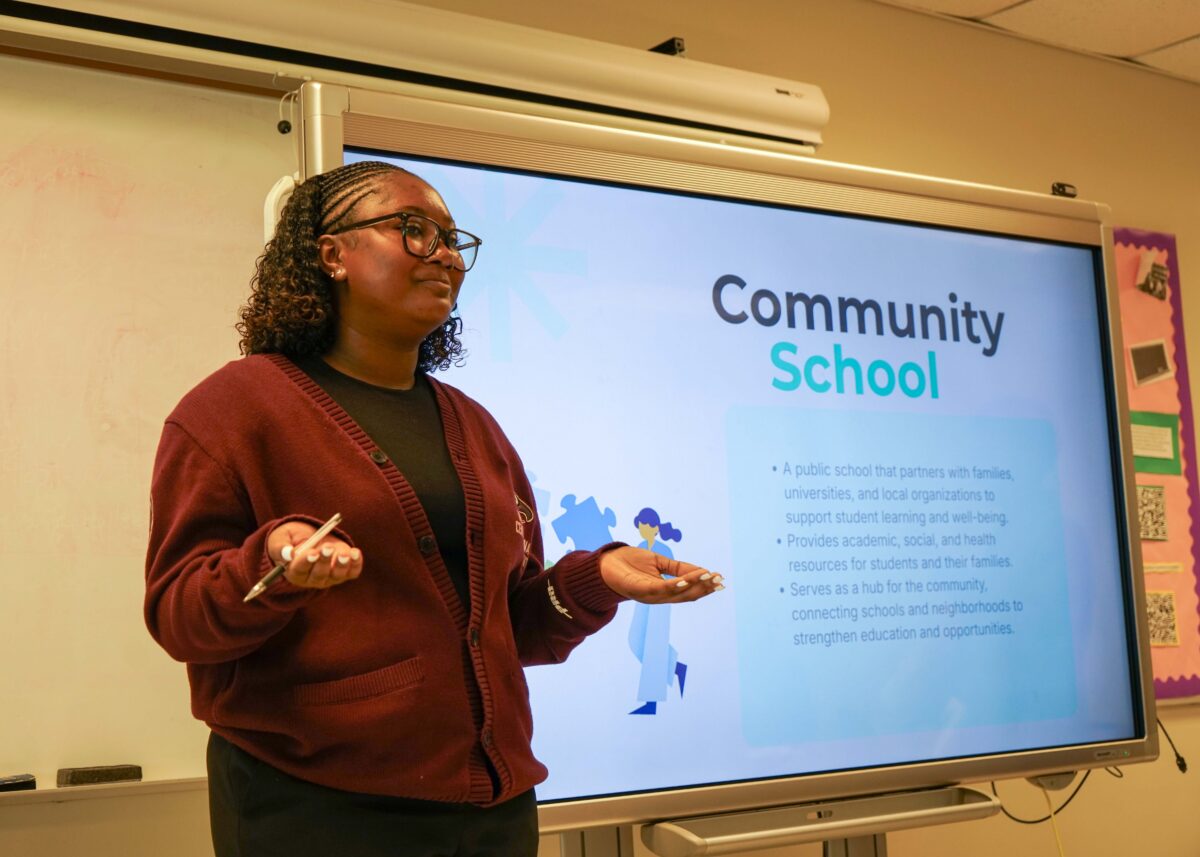
The second day, held at North Carolina Central University, continued to highlight this alignment. Students from Duke University, NCCU, and Elizabeth City State University presented action research projects shaped by questions identified by community schools themselves. Their work spanned public policy, health pathways, professional learning, storytelling, and data strategy.
For many students, the experience reflected a different kind of learning. One undergraduate researcher shared, “That presentation felt different from one I would give in a class, where a professor might focus on what was right or wrong. The audience genuinely wanted us to succeed because when we succeed, our public-school communities succeed.”
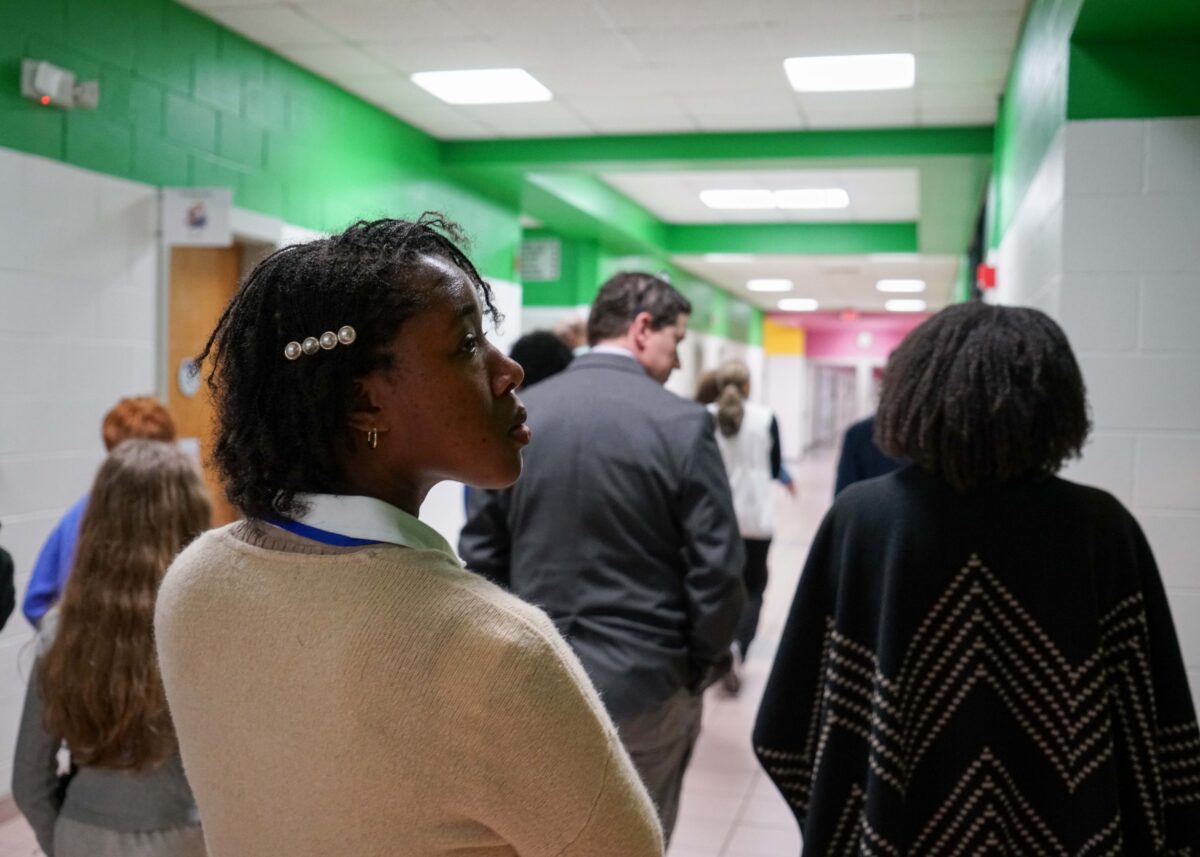
That sense of shared purpose carried into school visits later that day. Participants moved through classrooms and common spaces where partnerships are already taking shape. What might otherwise appear as separate efforts — family engagement, student supports, expanded learning — functioned as part of a coordinated system grounded in the needs and strengths of the community.
This is where the intersection becomes clear. Place-based education, the organization of resources, and cross-sector collaboration are not separate strategies. They work together to support the whole child while strengthening the systems around them.
And then, the school day began to wind down. Carpool cars would soon begin lining up along the curb. Buses idled in anticipation of dismissal. Inside, students gathered their things, preparing to head home. Outside, the adult visitors — educators, researchers, community college partners, and university faculty — boarded their own buses, heading back to campuses, offices, and organizations across North Carolina and beyond.
The work they had just witnessed does not stay inside a single school. It continues across classrooms, campuses, and communities, often in ways that are not immediately visible.
It’s a reminder of the kind of work that can be easy to miss. Not something entirely new, but a way of connecting what already exists, often taking shape through coordination, relationships, and time.
For those looking to better understand what this looks like in practice, watch the NC Community Schools documentary, read stories on EdNC, or explore the NCCSC website. You can also connect directly with the coalition or follow @nccommunityschoolscoalition on Facebook, Instagram, and LinkedIn. For those interested in seeing it firsthand, consider visiting a community school nearby.