
Standing in the Gap: Why This Work Is Personal at Salemburg Elementary
February 11, 2026
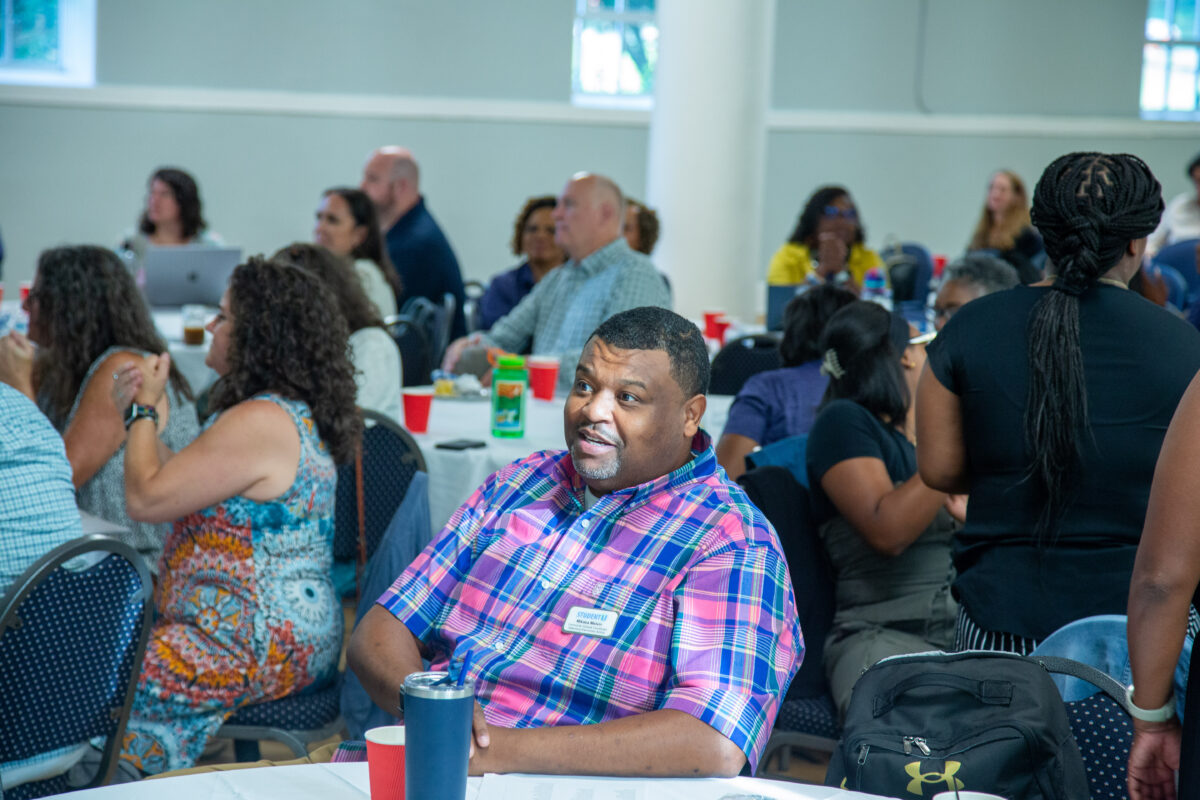
by Mikasa Melvin, Salemburg Elementary School, Community School Coordinator
My name is Mikasa Melvin, and I have spent the last 26 years of my life inside the same school building.
I started working for Sampson County Schools in 1999, when I was just 21 years old. I have been at the same school ever since. Today, I serve as the Community School Coordinator at Salemburg Elementary School, but the truth is I have been doing community work long before the title existed.
In a place like Sampson County, school is not separate from life. It is part of the family.
Salemburg is a rural, agricultural community. Many of our families farm, work on farms, or hold jobs that do not come with flexible schedules or easy access to services. But what we do have is pride. We know where we are from, and we care about each other.
That matters more than people realize.
When a child walks into our school, they do not walk in alone. They bring their parents, their grandparents, and their history. In many cases, I taught their mother or father. I know the nicknames. I know who to call, and how to call them.
That multigenerational connection is the foundation of my work.
As a Community School Coordinator, my job is to help make sure children are ready to learn when they arrive at school. Sometimes that means food. Sometimes it means clothing. Sometimes it means mental or physical health support. Other times, it means noticing something early and stepping in before it becomes a crisis.
Community schools stand in the gap, both figuratively and literally.
We do not replace families. We support them. We do not take over the work of teachers. We make their jobs easier by helping remove barriers that get in the way of learning.
For me, this work is personal. I am not just a coordinator. I am a father. My son goes to Salemburg Elementary. He is taught by people I have worked alongside for years. When I drop him off in the morning, I know he is surrounded by people who love him.
If my son grows up and thinks his father could have done more to better his education, and the education of others, then I failed. I want him to see me working, not just talking.
One of the things I care most about is exposure. Our children are smart, capable, and curious. But if you do not show them the world, they will assume this is all there is.
That is why I push to take students beyond the same old field trips. We visit college campuses. We attend sporting events. We go to museums and places many families have not had the chance to see. I want our children to picture themselves in those spaces, not as visitors, but as future students and leaders.
Because of Community School funding and partnerships, teachers no longer have to pay out of pocket to make those experiences happen. I can walk into a classroom and say, “I have got this.” That changes the environment for everyone.
This work depends on trust. I have strong relationships with our principal and our guidance counselor. They bring me into conversations early, when a child is hungry, struggling, or needs extra support. They do not supervise me. They support me.
That makes all the difference.
Community schools are not a list of services. They are a strategy that treats schools as community anchors. They are places where partnerships are coordinated, resources are aligned, and people work together instead of in silos.
Representation matters too. There are not many men who look like me in roles like this. I want our male students to look at me and say, “If Mr. Melvin can do it, I can do it too.” Not everybody is going to meet a professional athlete. But they can meet me.
I am rooted here. I did not leave and come back. I stayed. That matters in a small town, where respect is built over time and relationships carry across generations.
Community schools work because communities like Sampson County already know how to take care of each other. This model simply gives us the structure and support to do it better and more sustainably.
This is not charity.
It is an investment.
And when you invest in communities that serve schools, and schools that serve communities, everybody benefits.
At Salemburg Elementary, this work is not something extra.
It is who we are.